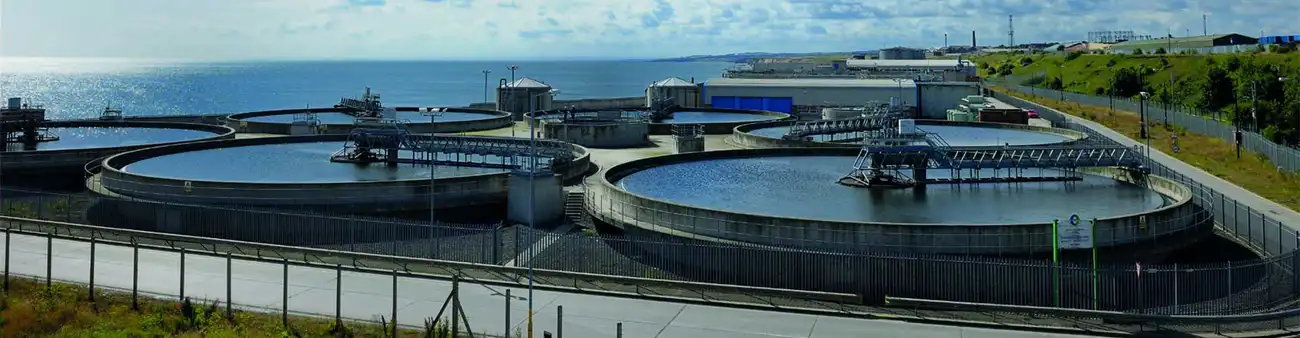
Based in Buffalo in New York State, Bird Island is one of the largest treatment plants in the Northeast.
Optimization of dissolved oxygen control system.
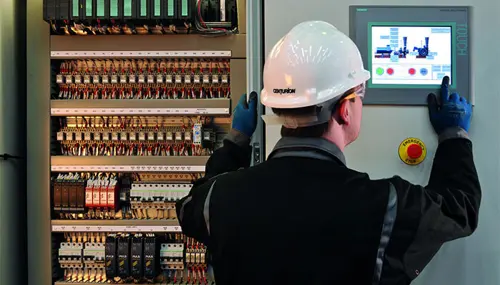
In 2011, Roots began operating the largest‑ever installation of its Roots IntelliView controls system at Bird Island’s aeration basins — a complex aeration blower application that required precise process air control to meet efficiency and performance objectives.
Bird Island Wastewater Treatment Plant (WWTP) in Buffalo, New York, had an inefficient aeration control system which, ironically, had been installed in 1998 as an efficiency upgrade.
Challenge
The operating principle was that air flow to all 32 of the plant’s aeration basins, or zones, would be properly controlled by an average of several Dissolved Oxygen (DO) level measurements taken by DO probes in a few of the basins. However, changes in tank loadings and physicadynamics, along with differences in oxygen transfer rates between diffuser grids, prevented a uniform air flow in the aeration zones. The plant also struggled to accurately adjust the air flow from the blowers because the 60 second open/close travel time of the valve actuators was too short.
By 2008, the Buffalo Sewer Authority (BSA) decided it had to cut the energy consumption of the blowers, which used more energy than any other part of the plant. To make that happen, the plant would have to get a new system that independently controlled each aeration basin. Bird Island, the second largest wastewater treatment facility in New York State, with a dry weather design flow of 180 million gallons per day (MGD), had obtained four 5,000 HP Roots single-stage compressors back in 1980, two of which had been rerated to 3,000HP in 1995, and after looking at product options for two years, BSA turned to Roots for another solution to Bird Island’s aeration control problems.